
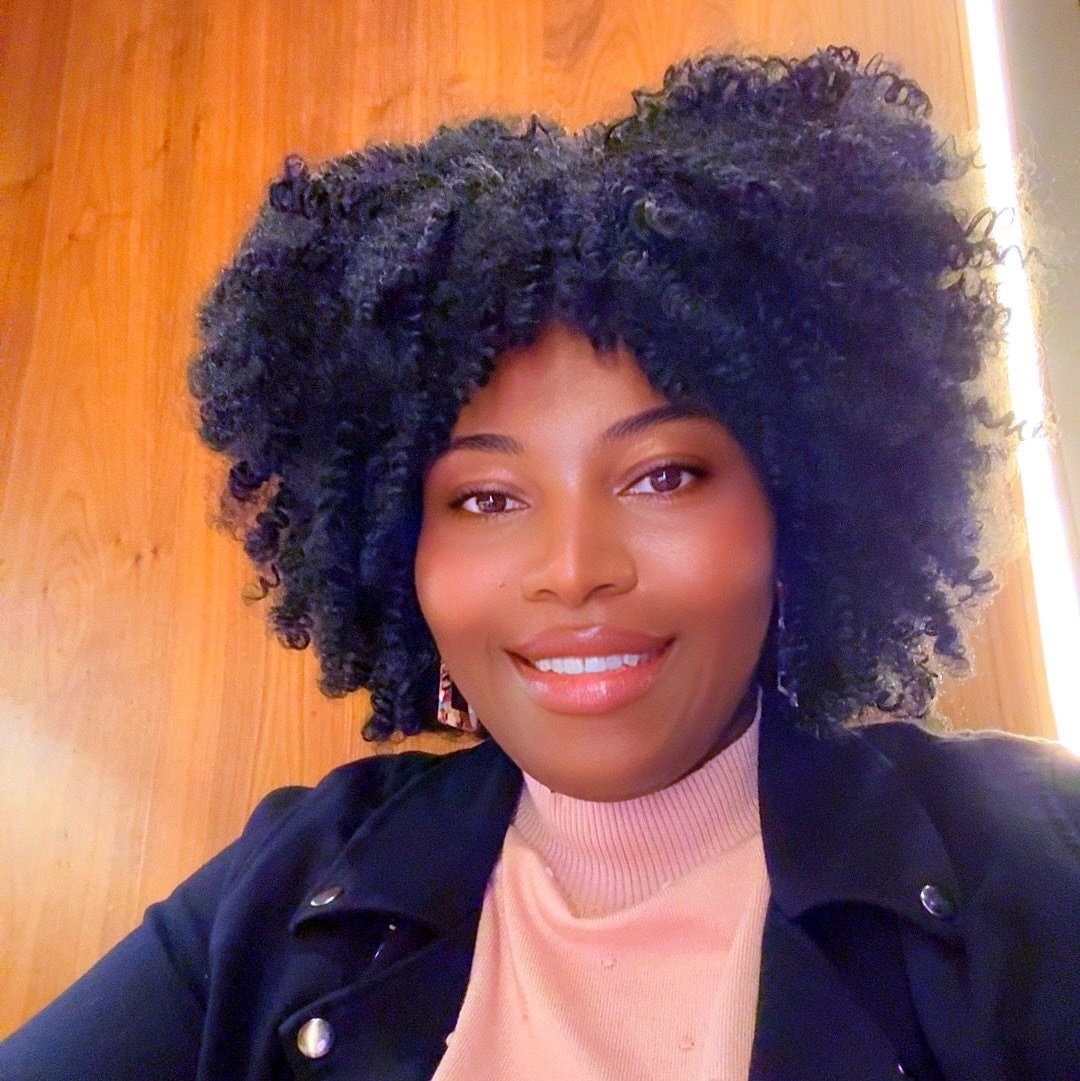
LaTasha DeLoach
“I came in [to this role, running the Senior Center] and was like, oh, we're gonna be pro-aging.”
I’m a licensed master social worker and a graduate of the University of Iowa. I’ve always worked in public service. I’ve worked for the City of Iowa City for 8 years, and before this I worked for Johnson County for almost 10 years.
I started out working with kids as a Community Projects Specialist in Johnson County Social Services, doing child abuse prevention work and trying to reduce kids of color going into juvenile justice systems.
For a long time, I co-chaired the statewide Disproportionate Minority Contact committee. My biggest feat was working to prevent kids from being charged as adults with felonies. They would be charged and then sent to jail. Well, if you're under 18, you have to be sight and sound separate from adults because of rape prevention laws. Which means the kids are in isolation for like 23 hours a day.
And these kids develop trauma. Sometimes they would get their charges reduced, but they’ve already been traumatized in jail. This is why I ended up advocating for the reauthorization of the Juvenile Justice and Delinquency Prevention Act. I went to Washington, D.C. to advocate, and it was great to have some Iowa folks up there when it passed. That’s something I'm really, really proud of.
I worked with kids for a long time and then I needed a change. I hit burnout after about 10 years, because it's very intense work.
Now I work with seniors as the director of the senior center in the City of Iowa City. It’s been life-altering in lots of ways, on a deep, personal level.
One of my greatest feats has been getting the community and our members to know what we do here. My predecessor had a different philosophy about aging than I did. She focused a lot more on being anti-agist. But I'm a social worker, right? So we're people first! I came in and was like, oh, we're gonna be pro-aging.
There are so many crossovers between the youth and seniors I’ve worked with.
We ignore their voices a lot. Every once in a while, we might leverage our positions to give youth the stage and the mic to speak up. And when they do, and they actually sound eloquent, we're like, oh my god. But that’s ageist, because why couldn’t they have an amazing thought? And I realized that once seniors retire or get in their 60s, people stop hearing them too. Their voices are being silenced.
I also recognized that both groups had significant issues with food insecurity. When I worked at the county, we had a food program where kids could take food home for weekends, but only from kindergarten through fifth grade. So I worked towards implementing food pantries into high schools. Then when I came to this job and the pandemic hit, I was concerned about seniors not getting food. So we opened up a food pantry. At first, it was a little dorm fridge, and now it's like a reach-in, with a stand-up freezer, with 100 seniors a week getting food. And we do it with dignity.
The sexual education piece also was huge. I could spend a lot of time having very no-holds-barred conversations with teenagers about how to keep themselves safe. I've had so much experience talking about this thing that other people felt uncomfortable with. It was very comfortable for me to transition to seniors and say, just because you're older, that don't mean you can't pick up some stuff. So I implemented condom dispensers at the senior center.
Now I’ve been spending a lot of time building out programs that are more intergenerational now.
It's taking those worlds and combining them. We're all a part of the same community, and a lot of times we isolate them. Unintentionally, but the consequences of that isolation is devastating from a health perspective.
In January right before Covid, we decided we needed to end social isolation.
So how are we doing that? I narrowed it down to four things. We would do community engagement to keep people informed. We would work on wellness, whether that’s financial, spiritual, physical, whatever. Third, we focus on lifelong learning. And finally, we focus on social connections.
My dad was always pushing for me to be in public service. He was a Navy vet and a racial justice advocate. I keep his hat in my office.
We moved to Iowa in the 90s, which was a tough time to live in the state. There was a lot of racial distress. And he was like, I'm not going to the peaceful protest, I'm going to their rally. He made the paper, for sure, with his finger pointing in people’s faces. He was a Southside Chicago dude, he wasn't taking none of that, you know. He was imperfect in every possible way. But he was adamant that we knew who we were as Black children, especially growing up in predominantly white spaces. He believed that you stand up for yourself, your role in life is not to be walked all over. And if they don't give you a seat at the table, bring your own folding chair. He was always pushing me to be in public service and get one of them good government jobs, you know?
I’ve been the first to many things.
I was the first Black woman to win an election in this county in 30 years, when I ran for school board. There had only been one Black woman before me. Now I’m the first Black woman to run a department in this city.


.jpeg)