
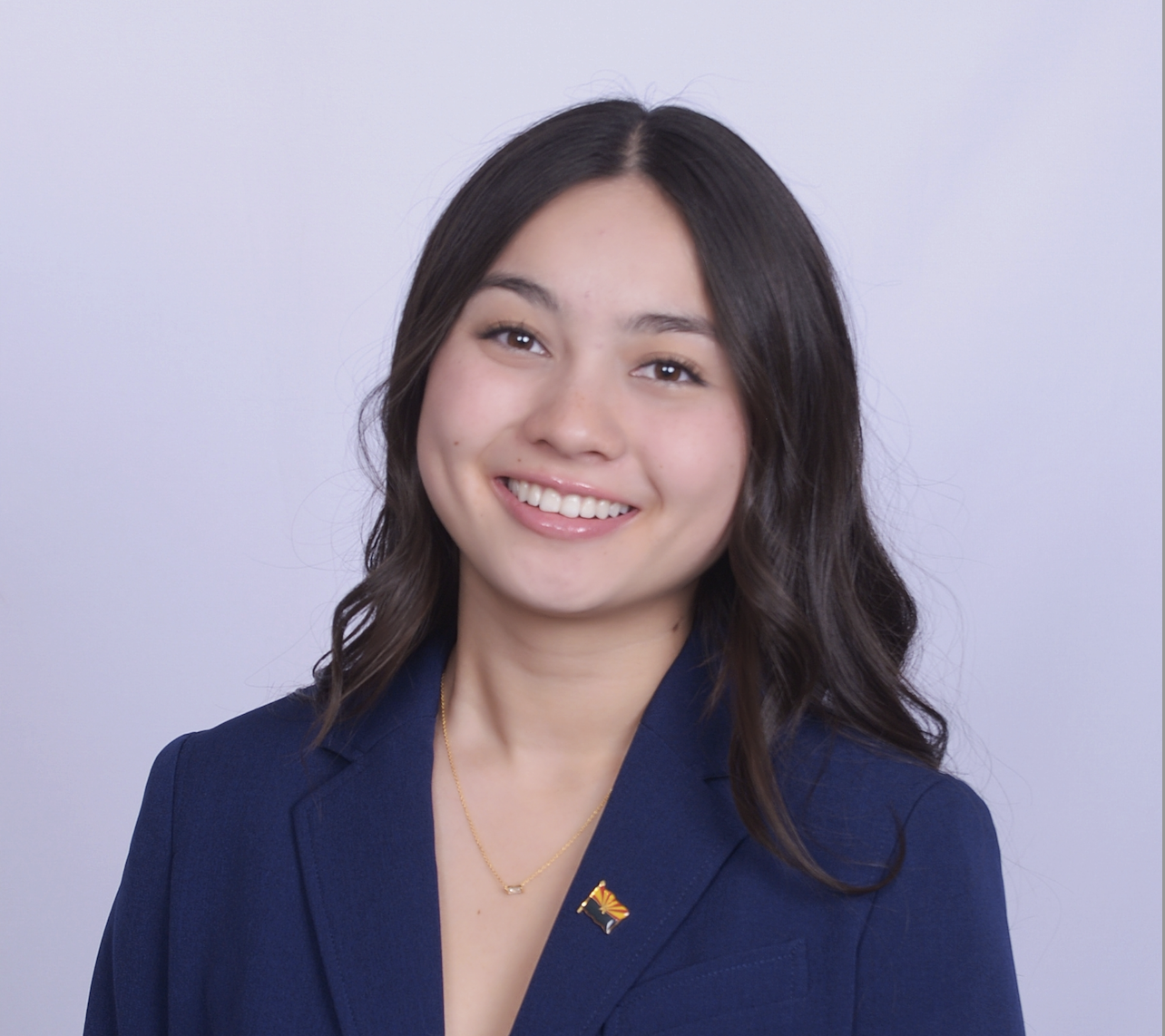
Katie Ritchie
I was a freshman in high school when the pandemic hit. While other students were trying to adjust to virtual learning, I found myself drawn to something unexpected, our district's governing board meetings.
There was something fascinating about watching policies being shaped in real-time, decisions that would directly impact my peers and me.
I'd sit there listening to debates about school budgets and curriculum reshaping, and something clicked. This wasn't just administrative work – this was where real change happened. This was where voices could make a difference.
That curiosity led me to the Arizona Governor's Youth Commission, where I became the Education Workgroup Chair. Suddenly, I wasn't just observing anymore, I was developing programs to share Free Application for Federal Student Aid (FAFSA) resources with underserved communities, creating pathways to post-secondary education for students who might not see college as an option.
Almost four years later, I still believe those school board meetings are where young people can find their voice. It's where I learned that advocacy isn't just about speaking up, it's about showing up, listening, and understanding how to create change from within the system.
Government youth leadership programs tend to attract students who are already natural-born leaders. You see the same hundred faces rotating through different programs. As someone who's been in that circle, I understand both its value and its limitations.
Now, as Co-Advisor to the Mayor's Youth Advisory Council in Tempe, AZ, I work with 30 high school students on their community projects. My goal isn't just to support these projects, it's to reshape how we think about youth leadership.
This summer, I interned at the U.S. Department of Education's Office of Communications and Outreach in DC. I worked on Free Application for Federal Student Aid (FAFSA) completion initiatives, Back to School programs, family engagement – all these crucial touchpoints between government and community. What struck me most was how these programs could shape young leaders' outlooks on the world.
That's what drives me now, expanding these opportunities beyond the usual suspects. How do we reach the quiet kid with brilliant ideas? The student who's never seen themselves as a leader? Public service is about building bridges and opening doors for others to walk through.
A remarkable thing happened in our community during the pandemic, summer childcare programs became free. I was working at a Boys and Girls Club through a Bank of America student leaders program, and suddenly we had a waitlist of 200 kids. That experience showed me the real impact of policy decisions on families.
Being biracial, my mom immigrated from China, I've always understood the importance of bridging different perspectives. Whether I'm conducting outreach to state and local governments on Free Application for Federal Student Aid (FAFSA) completion or fostering healthy civic dialogue among high school students, I see how crucial it is to create spaces where everyone's voice matters.
Public service lives in those spaces where policy meets real life. It's in school board meetings where parents advocate for their children's future. It's in summer programs that give working parents peace of mind. It's in the face of every student who realizes they have the power to make change.
If I had to describe public service in a few words, they would be: selflessness, active listening, and empathy for others. Because at its core, this work isn't about the positions you hold or the policies you write – it's about the lives you touch and the doors you help open for others.
.png)
.jpeg)
.jpeg)


